What to Include in a Roofing Estimate
Published by ToolbeltDocs · November 17, 2026 · General business guidance
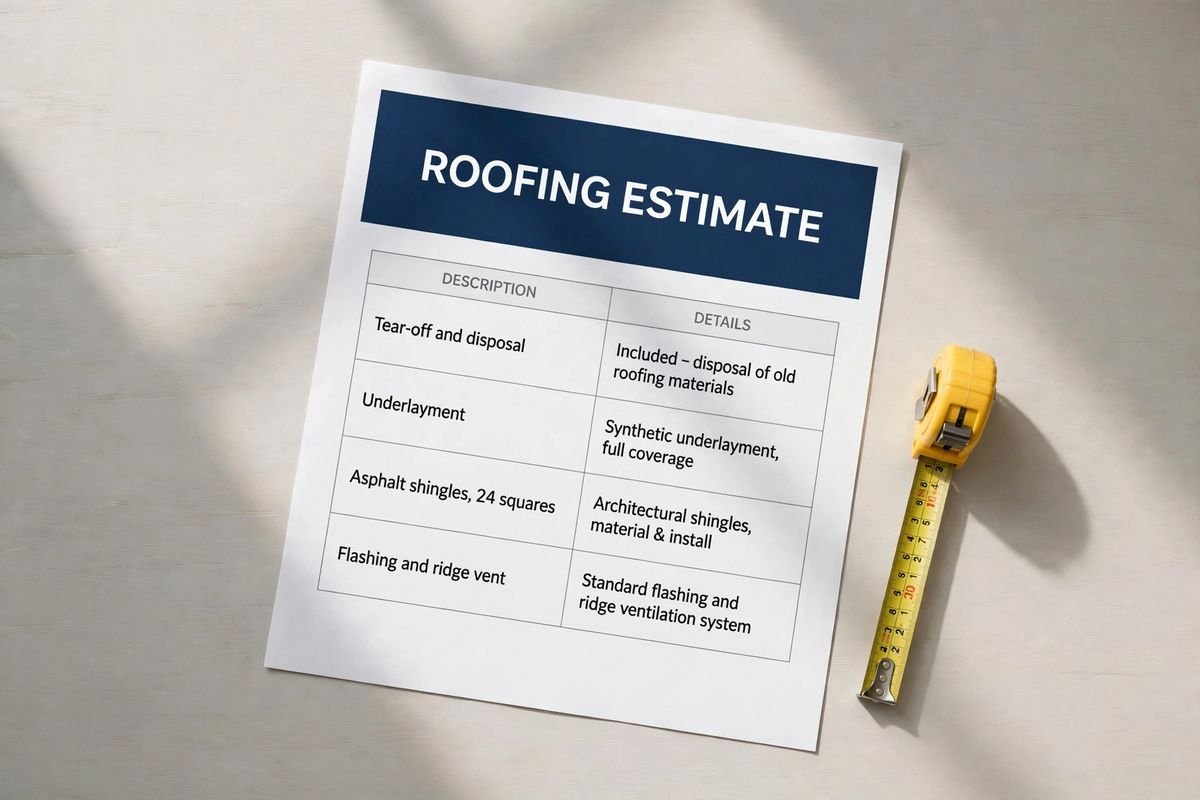
A roofing estimate should define the roof area and system, list the removal and installation work, explain uncertain conditions and show a clear price. Customers need enough detail to compare the scope, not just the total.
Identify the roof and the document
Start with the property address, customer contact, your business details, estimate number, issue date and revision. Identify which structures or roof sections are included. A detached garage, porch or low-slope extension should not be left ambiguous. State whether the proposal concerns a repair, a partial replacement or the entire described roof.
Record how measurements were obtained and what still needs confirmation. Roof area is different from a house’s floor area. Multiple planes, slopes, dormers and penetrations affect the scope. Do not treat an aerial measurement or a customer photograph as proof of the deck condition or the number of existing layers.
Make quantities and units understandable
Use consistent units for roof covering, ridge, edge details and individual components. A roofing square represents 100 square feet. Keep measured coverage separate from any material waste allowance so the estimate does not hide why the order quantity is higher. Confirm your calculations against the proposed product and roof geometry.
Where a quantity is provisional, label it accordingly and explain how it will be confirmed. A broad allowance without a unit or reconciliation process makes comparison difficult. Your working notes can be detailed, but the customer-facing description should still make the included work clear.
List removal and preparation separately
Describe the tear-off scope, included existing layers, disposal and site protection. Note practical assumptions such as dumpster placement, driveway access and permitted working areas. If equipment access is restricted, reflect that in the scope and your own costing rather than burying it in an unexplained surcharge.
State how you will address concealed deck deterioration if it is discovered. Identify any included repair allowance or the process for pricing and authorizing extra work. Avoid promising that every hidden problem is included unless that is genuinely the offer. A clear change process helps preserve the boundary between the assessed roof and later discoveries.
Describe the proposed system
Identify the proposed roof covering, product specification and relevant selections. List the underlayment, edge details, flashing transitions, penetrations and ventilation work included. If existing components may be reused, say what is subject to inspection. Two estimates for the same covering can differ substantially when one omits these details.

This is a paperwork checklist rather than an installation specification. Qualified professionals need to assess the roof, product instructions and applicable requirements. Do not copy a technical detail from a generic estimate merely because it sounds comprehensive. Record what is actually proposed and have the appropriate specialist confirm the specification.
A scope checklist for the customer copy
- Roof sections, measured area and covering specification
- Removal scope, existing layers and disposal arrangements
- Preparation and concealed deck repair assumptions
- Underlayment, edge, flashing and penetration details
- Ventilation work and components replaced or reused
- Site protection, access, cleanup and final collection
- Allowances, exclusions, timing assumptions and approval steps
Use these headings to review the job, not as proof that each item applies. Explain exclusions in the same language as the scope. If gutters, fascia, interior repairs or another structure are outside the offer, identify them where relevant. A customer should not need specialist knowledge to discover a major omission.
Show the calculation without implying market rates
Separate materials, labor, equipment and disposal using your current supplier and business figures. If presenting a lump-sum offer, retain enough scope detail to explain what that sum covers. Show optional upgrades separately from the base scope. State applicable tax or adjustments clearly rather than leaving the customer to infer whether they are included.
The roofing estimate template contains illustrative figures and editable fields. Those figures are not published roofing rates and should not be used to price a real property. Replace them after checking quantities, access, product selection, local costs and your business pricing method.
Clarify timing, warranty and acceptance
Describe the expected scheduling process and dependencies, including material availability and weather where relevant. Distinguish an estimate of timing from a confirmed start date. Record what must happen before scheduling, such as selections or required approvals, without inventing a universal deposit rule.
Manufacturer warranty coverage and a contractor workmanship promise are different matters. Identify the documents and actual commitments you will provide. Do not promise coverage merely because a product brand appears in the estimate. Have your agreement and consumer disclosures reviewed for the requirements that apply to the job.
Preserve the accepted version
Before sending, compare the scope against site notes and quotations. Check quantities, line amounts, validity period and instructions for questions or acceptance. Save the customer-facing PDF with a unique reference. If the customer requests changes, issue an identifiable revision rather than silently replacing the earlier attachment.
When additional work is proposed, use a separate change order record and the approval process required for the project. Reference the accepted scope and changes when preparing the roofing invoice. The FTC’s consumer guidance is useful context for clear written estimates, but local contract and licensing requirements still need independent review.